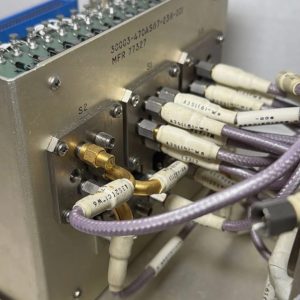
The Aviation Switching Module – NSN 4920-01-250-2696 (AS-IS / Untested) provides aviation maintenance organizations, military-surplus buyers, aerospace technicians, equipment restorers, and collectors with access to a catalog-identified switching component whose operational status has not been confirmed.
The Aircraft Switching Module offers potential maintenance or restoration value, while the Aerospace Switching Module must be inspected for condition, completeness, modification, and storage-related deterioration.
An Aircraft Electrical Switching Module, Aviation Electrical Control Module, Aircraft Power Switching Module, Aerospace Electrical Control Unit, and Aircraft Signal Switching Module may describe related switching or control functions, but the exact purpose of this NSN should be verified before use.
The Aviation Control Module may be associated with a larger Aircraft Electronic Switching System, while the Aerospace Switching Unit and Aircraft Electrical Module should be inspected before connection or installation.
Why NSN Verification Matters
The National Stock Number provides an important catalog reference that can help buyers research the item’s supply history, technical identity, related part numbers, and possible equipment application.
An identification plate should not be removed, repainted, altered, or covered because it may provide the strongest evidence of the component’s origin.
Buying an Untested Aviation Module
The buyer should plan for professional inspection, troubleshooting, repair, parts replacement, or display-only use.
A current-limited and controlled test setup may be appropriate when selected by qualified personnel.
Aircraft Switching Module Applications
A module used with maintenance equipment may function differently from one installed onboard an aircraft.
Missing knobs, guards, labels, connectors, covers, or fasteners may reduce completeness.
Inspecting Aerospace Electrical Hardware
Careful exterior evaluation can reveal evidence of previous use or damage before the unit is opened.
Unknown connectors should not be forced into visually similar plugs.
Inspecting Aviation Module Wiring
A qualified technician should determine whether additional internal inspection is justified.
Seals, labels, inspection marks, tamper indicators, and original component arrangements may have historical or technical value.
Aviation Electrical Control Module Functions
The exact interface must be established through diagrams, manuals, connector data, or verified system information.
High-resolution photographs can preserve readable details before cleaning or restoration.
Choosing an Aircraft Power Switching Module
Current capacity, voltage, duty cycle, contact type, protection requirements, and load characteristics should be confirmed before testing.
Power-input and output terminals should be checked for looseness, heat discoloration, corrosion, damaged insulation, and unsuitable previous repair.
Aerospace Module Troubleshooting
Its internal design may include electromechanical components, solid-state devices, wiring assemblies, circuit protection, or specialized connectors.
Undocumented modifications can make future troubleshooting and identification more difficult.
Signal Switching Module Inspection
An incorrect connection may damage sensitive electronics even when the module itself receives little power.
A complete accessory inventory improves the commercial presentation of the Aircraft Signal Switching Module.
Aviation Control Module Applications
An Aviation Control Module should be treated as one component within a larger system rather than a standalone universal controller.
Inspection tags, modification plates, repair labels, and revision marks can provide important information.
Aircraft Switching Unit for Maintenance or Restoration
A complete but untested unit may have different value from an incomplete component known to contain damage.
Responsible educational use can extend the value of the Aircraft Switching Unit.
Power Distribution Module Inspection
A module should not be loaded electrically until contact condition, insulation, wiring, and circuit configuration are understood.
Bent brackets, enlarged holes, missing fasteners, or distorted mounting surfaces may complicate restoration.
Aircraft Module Functional Evaluation
Documented condition improves confidence among buyers of legacy Aircraft Electrical Control Unit equipment.
Unknown circuits should not receive voltage simply because a connector pin appears to be a power input.
Inspecting a Power Control Module
Responsible product information protects buyers seeking an Aviation Power Control Module.
Warning labels should remain visible and legible.
Aviation Switching System Troubleshooting
An Aircraft Electronic Switching System may consist of multiple modules, harnesses, control panels, relays, indicators, power sources, and associated equipment.
Professional analysis supports responsible Aircraft Electronic Switching System maintenance.
Long-Term Storage of Aircraft Electronics
The unit should not be stacked beneath heavy equipment or left on conductive surfaces.
Insured and trackable transportation supports responsible sales of specialized aviation hardware.
Buying AS-IS Aviation Electronics
A buyer seeking an operational replacement has different needs from a collector, technical school, parts dealer, or restoration specialist.
Remote buyers should request current photographs of the actual unit instead of relying on catalog images or pictures of similar equipment.
Inspecting the Aviation Switching Module Before Purchase
The AS-IS and untested condition should appear clearly within the title, description, invoice, and read more transaction terms.
- Confirm that the identification plate shows NSN 4920-01-250-2696 and record every manufacturer number, serial number, contract marking, revision, and modification label.
- Inspect the enclosure for dents, cracks, corrosion, missing screws, altered holes, broken seals, damaged brackets, and signs of previous opening.
- Confirm the written invoice, AS-IS terms, payment protection, packaging method, shipping insurance, inspection period, and return conditions.
Professional Bench Evaluation
The module should not be powered until input requirements, polarity, grounding, circuit protection, and expected loads are understood.
Partial operation should not be presented as complete certification, calibration, or airworthiness.
Documenting Aviation Electronics Restoration
Replacement parts should be selected according to electrical rating, mechanical fit, material, environmental requirements, and original design intent.
Photographs can document internal condition before and after work.
Final Thoughts on the Untested Aircraft Switching Module
The Aviation Switching Module – NSN 4920-01-250-2696 (AS-IS / Untested) may suit aviation workshops, military-surplus collectors, aerospace technicians, educational programs, equipment restorers, and specialist parts buyers.
An experienced aviation-electronics technician should assess the module before it is powered, installed, or connected to other equipment.
Whether customers search for an Aircraft Electronic Switching System, Aerospace Switching Unit, or Aircraft Electrical Module, broad terminology should not replace technical application research.
With prompt attention to switches, connectors, wiring, enclosure condition, corrosion, labels, and internal components, the module can preserve its technical and commercial potential.